Up next in 10


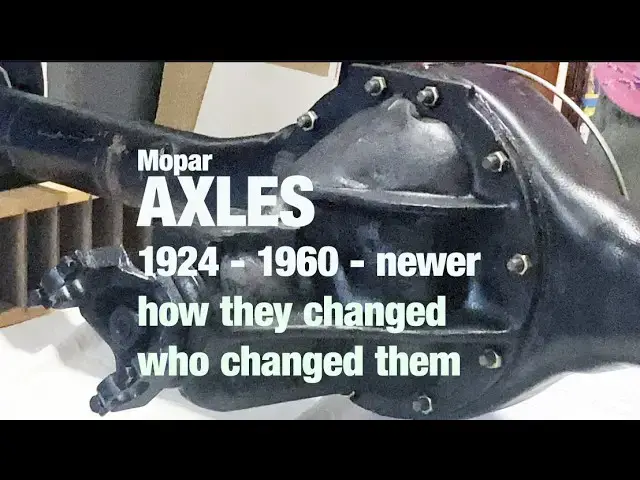
The former head of Valiant body engineering told us how axles were designed “back in the day” and how they switched to their 1960s-1990s design—and what he would have done differently!
#mopar #axle #valiant #plymouth #dodge #classiccars #rearaxle #autohistory
Show More Show Less View Video Transcript
0:00
hi this is Dave from motels and I'm here
0:01
to build on Pete Do's recent talk about
0:04
axles my story here is actually Al
0:08
Bosley's Story the axle is surprisingly
0:12
one of the items on a car which requires
0:15
the longest lead to set up tooling so
0:17
the Valiant axle was planned before the
0:20
details of the engine or transmission
0:22
were known in early 1957 in fact Al was
0:26
responsible for the rear axle the
0:28
drivetrain and the rear suspension even
0:30
though he was still a pretty young
0:32
engineer new to the company the front
0:35
and rear suspension designs were then at
0:38
different departments at Chrysler this
0:40
is kind of an odd idea since they really
0:42
do have to work together Evan Jones was
0:45
the manager of the axle lab and he had a
0:48
great deal of experience so he would
0:50
sketch the axle out and write down the
0:52
specifications and then the drafting
0:54
Department would convert them into
0:56
drawings for manufacturing and
0:58
purchasing Evan started working on this
1:00
axle with Al Bosley at the start of 1957
1:04
they talked a lot about what would be
1:05
needed but they didn't have a whole lot
1:07
of information about the car that the
1:09
axle was being designed for the length
1:11
of the pinion the vehicle track the
1:14
amount of power or the amount of weight
1:16
they only knew that it would be a light
1:18
small car Al said that uh Evan had
1:21
talked with the people who actually made
1:23
the axles down in Lynch Road and they
1:25
were not happy with the Hotchkiss axles
1:28
used at the time and they included that
1:30
the 7 and 1/4 in axle using a carrier
1:33
tube was the way to go because it
1:35
provided more flexibility on tread it
1:38
was more rigid and it avoided
1:40
manufacturing issues the axles that
1:43
Chrysler traditionally used were
1:44
two-piece drive axle arrangement with
1:47
tapered outer end shafts that fit into a
1:50
separate flange and had a nut and a key
1:52
that held it together and they were very
1:54
hard to get apart if you needed to get
1:56
to the brakes or change axle shafts it
1:58
was Al Bosley proposed using a flanged
2:01
shaft like GM and Ford now at Chrysler
2:05
since the very first Chrysler 1924 they
2:08
always use straight axles with a taper
2:09
and a bolt on flange instead of using a
2:12
hot upset process where the end of a bar
2:15
is heated and then forged back on itself
2:17
to create a larger flange and the people
2:19
at the axle plant said that it would be
2:22
a little more expensive but they could
2:23
still do it and it would be better
2:25
overall for the car the drawings were
2:27
released in mid1 1958 to the Lynch Road
2:30
axle plant and to the purchasing and
2:32
they just started designing the tooling
2:34
they ordered the gear cutting machines
2:36
got the casting patterns done and did
2:38
everything else they needed now Al
2:40
Bosley said that there were two things
2:41
that he wishes that they had done better
2:44
and the first thing is that neither of
2:46
them ever thought anyone would run 300
2:48
brake horsepower through that axle
2:50
that's around 240 horsepower as we talk
2:53
about it now and the differential gears
2:55
in the pin were really too small on the
2:57
Lighter Side the short grip versions did
3:00
hold up better and the other thing that
3:01
he wishes he had done differently was
3:04
something that they did to save so in
3:06
the 8 and 3/4 in shle that do talked
3:09
about a couple of days ago the main
3:11
drive gear pumps oil up to the front
3:13
bearing along a passageway in the top of
3:16
the actual casting there is a little
3:18
void along the bottom of the rear
3:19
bearing so the oil can get back again
3:22
and they left that out on a 7 and a quar
3:23
inch axle that was used on the original
3:26
Valiant it turns out that both bearings
3:28
didn't get enough lubrication so the
3:29
axle ran a little hot Al Bosley later
3:32
said perhaps if we had realized that
3:34
someday we would want to put a 346 pack
3:36
engine in front of it we might have
3:38
thought about it a little bit longer in
3:40
any case most of these things got
3:41
changed later and he said that he
3:43
thought that the waight and cost savings
3:45
for the first 3 or 4 years was a good
3:47
decision now you might be wondering
3:49
about the small five bolt circle that's
3:52
at the end of this axle at either end
3:54
for the wheels to go on by the time that
3:56
that was set up Al Bosley had joined the
3:58
Valiant task force they made a choice to
4:00
use a smaller bolt circle to make the
4:03
axle shaft easier uh to process to make
4:07
the upset process easier to create that
4:09
flange and to save weight so the Valiant
4:12
has a smaller bolt circle than the Chevy
4:14
or Ford did but with five wheel bolts
4:17
instead of four the Falcon and the
4:19
Chevrolet had four wheel bolts on a
4:21
larger Circle the wheelmaker said that
4:23
that would be okay so they were able to
4:25
cut the diameter on the flanged axle
4:27
shaft I would like to thank Al Bosley
4:29
for providing this information and he
4:32
really did provide me with a good amount
4:34
of material which I still haven't
4:36
finished going through and presenting to
4:38
you yet but hopefully I'll have more for
4:40
you at some point soon I would like to
4:43
thank Al Bosley who passed this story on
4:46
to me when he was in his 90s and Peter
4:49
dah who did the recent Mopar Axel
4:52
presentation
#Autos & Vehicles
#Classic Vehicles
#Vehicle Modification & Tuning